Australia’s farms are heavily dependent on synthetic fertilisers, 98% of which are imported.
Our soils are depleted and our waterways carry the runoff.
There is a better way – and it has been growing offshore all along.
Healthy kelp forests. Healthy oceans.
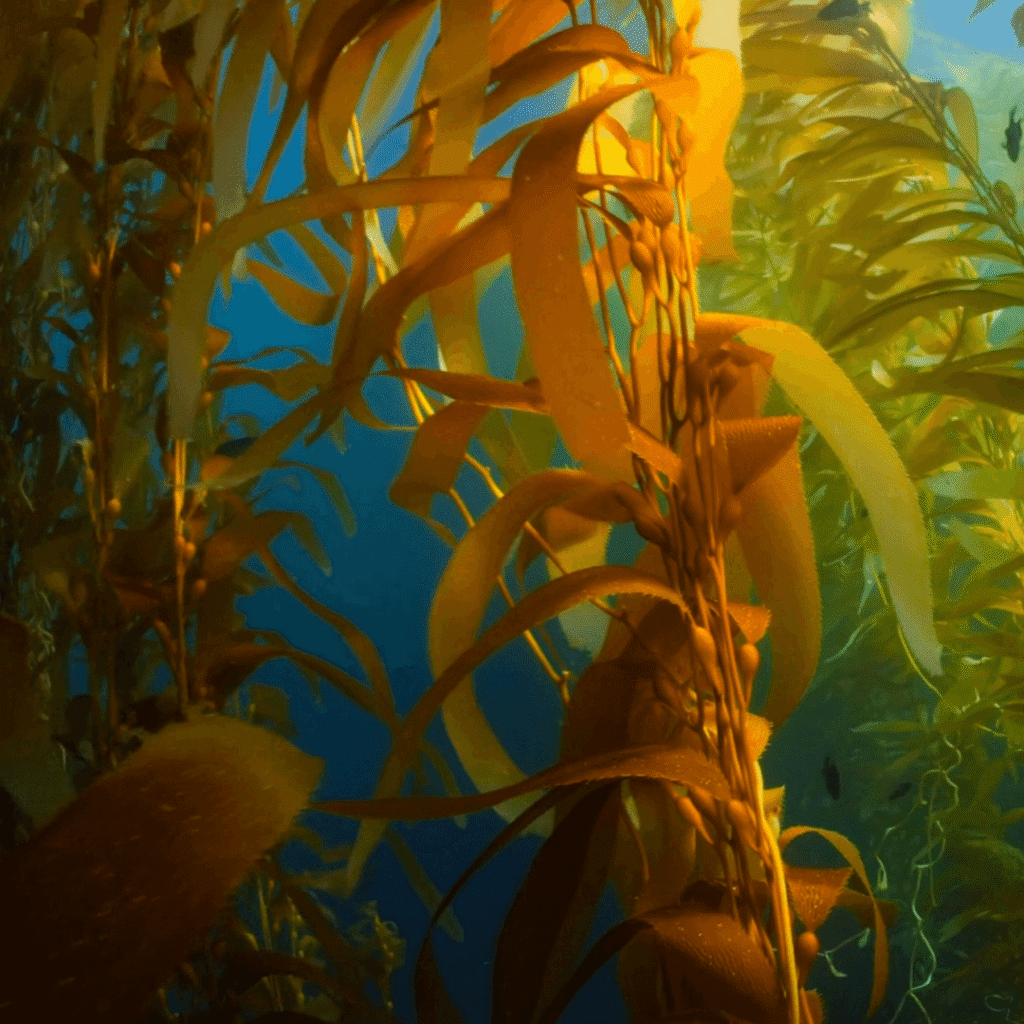
Kelp forests are a powerful indicator of ocean health. Where they thrive, biodiversity follows. Where they had been lost, Canopy Blue’s cultivation program has workedto restore the conditions for their return.
Seaweed cultivation can benefit ocean ecosystems by providing climate adaptation benefits that help build environmental resilience, including:
Temporary, localised refuge against increasing temperatures
Reversal of acidification and deoxygenation
Coastal protection and erosion prevention
Bioremediation and water quality improvement
Biodiversity enhancement through habitat provision
Decarbonising the Economy
Canopy Blue is currently developingtwo products from native seaweed, offering direct replacements for emissions-intensive agricultural inputs.
The first in commercial development is a bio-stimulant for broadacre agriculture and the second is an animal feed supplement for livestock.
The ocean spans 71% of the Earth’s surface but contributes only 2% of the global food supply. Seaweed’s potential to contribute to food security – as a bio-stimulant for crops and an animal feed supplement for livestock – represents one of the most under utilised opportunities in Australian agriculture.
What are Kelp Forests?
Kelp forests are created by large canopy-forming brown seaweeds and dominate a quarter of the world’s coastlines. They provide critical ecosystem services – refuge for biodiversity, carbon storage and food production. Australia’s kelp forests form the Great Southern Reef, a global biodiversity hotspot where approximately 70% of species are found nowhere else in the world. Global kelp forests are declining at an estimated 1.8% per year.
Carbon Capture
There is growing scientific interest in the role seaweed can play in carbon sequestration. While the methodology to quantify and certify this potential is still developing, Canopy Blue believes the evidence warrants careful, ongoing attention. Seaweed for carbon capture and storage has many environmental co-benefits, including reversing ocean acidification and reversing eutrophication by removing nutrients such as nitrogen and phosphorus.
Canopy Blue has been an active participant in the restoration of Western Australian kelp forests, partnering with a research institution on a program that has grown and deployed over 100,000 kelp plants. As the seaweed industry matures, natural capital markets – including Nature Repair and biodiversity credits – represent an important part of the broader story.